Ask the Attorney: Common Homebuyer Questions Answered
Buying a home has a way of making smart people feel like they missed a vocabulary lesson. Title commitment. Earnest money. Contingencies. Escrow. Disclosures. The words come fast, and the stakes are high.
Most homebuyers have more questions than they ask out loud. That is normal. A home purchase is not just a big financial decision. It is also a legal transaction with deadlines, documents, and rights that can affect you long after closing day.
This article is for general information only and is not legal advice. Real estate laws and contract practices vary by state, so buyers should speak with a qualified attorney about their specific transaction.

Do I really need an attorney when buying a home?
Not every state requires an attorney for a residential real estate closing. In some places, buyers often work mainly with a real estate agent, lender, title company, or escrow company. In other states, attorney involvement is common or required for certain parts of the transaction.
Even when the law does not require one, legal review can still be valuable.
A home purchase usually involves:
A purchase contract
Inspection rights and deadlines
Financing and appraisal terms
Seller disclosures
Title review
Easements and restrictions
Closing documents
Deed and ownership issues
A real estate attorney’s job is not to slow the deal down. The real value is helping a buyer understand what they are signing, what deadlines matter, and where risk may be hiding.
For example, a contract may look standard but include a short deadline for inspections. A title commitment may disclose an easement that affects where a fence, driveway, or future addition can go. Closing documents may include charges the buyer did not expect.
A good legal review can help answer plain questions such as:
What happens if the loan is denied?
Can the seller keep the earnest money?
What does the title exception actually mean?
Are there restrictions on how the property can be used?
What documents create obligations after closing?
The goal is not to make every issue scary. The goal is to make the buyer informed before the buyer is legally bound.
What happens if title issues come up?
Title is about legal ownership. A title search looks at public records to confirm that the seller can transfer ownership and to identify claims, liens, restrictions, or other matters tied to the property.
Some title issues are routine and can be fixed before closing. Others require more time, more documents, or a hard decision about whether the buyer should move forward.
Common title issues include:
An old mortgage that was paid but never properly released
A judgment lien against the seller
A tax lien
A mistake in a prior deed
A missing signature from a past transfer
A boundary or access issue
An unresolved probate matter
A competing ownership claim
Some of these problems can be resolved with a payoff, release, correction deed, affidavit, or additional documentation. For instance, if an old mortgage still appears in the land records, the title company may need a recorded release from the lender.
Other issues are more serious. If a property has unclear access rights, the buyer may not have a legally reliable way to reach the home. If an estate was never handled correctly, the seller may not have full authority to sell. If there are competing ownership claims, closing before the issue is resolved could leave the buyer in an expensive dispute.
The main point is simple: title issues should be addressed before closing whenever possible. After closing, the buyer may own the problem along with the property.
Title insurance can offer protection for certain covered title defects, but it does not mean every issue should be ignored. Buyers should still review title exceptions and ask questions before signing.
Can I back out of a contract?
Sometimes, yes. But a buyer usually cannot walk away at any time for any reason without consequences.
A buyer’s right to terminate often comes from the contract. The exact language matters. Timing matters too.
Common reasons a buyer may have a contractual basis to cancel include:
The inspection contingency allows termination within the inspection period
The buyer cannot obtain financing despite making a proper effort
The appraisal comes in below the purchase price and the contract provides a remedy
The seller fails to make required repairs or disclosures
The seller cannot provide clear title
The seller defaults on an obligation under the agreement
The risk comes when a buyer misses deadlines or cancels without a valid contract reason. In that case, the seller may claim the buyer breached the contract. The buyer’s earnest money could be at risk, and in some cases, the contract may describe other remedies.
This is why the contract calendar matters so much. A buyer should know, in writing:
The inspection deadline
The financing deadline
The appraisal deadline, if any
The title objection deadline
The closing date
The notice requirements for termination
A buyer should not rely on a casual text, an assumption, or a verbal understanding when canceling a real estate contract. If a buyer wants to terminate, the safest path is to review the contract first and give notice in the required way.
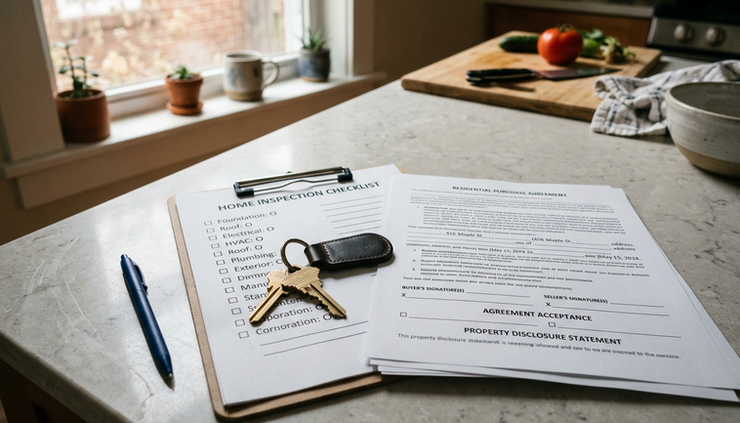
What is earnest money?
Earnest money is a deposit that shows the buyer is serious about purchasing the property. It is usually paid soon after the contract is signed and held by a third party, such as a title company, escrow agent, broker, or attorney trust account.
If the sale closes, the earnest money is typically credited toward the buyer’s purchase price or closing costs.
If the sale does not close, the result depends on the contract and the reason the deal fell apart.
A buyer may be entitled to a return of earnest money if the buyer properly terminates under a valid contingency. For example, if the contract allows termination after an unsatisfactory inspection and the buyer gives timely written notice, the deposit may be returned.
A buyer may risk forfeiting earnest money if the buyer breaches the contract. For example, missing a financing deadline, refusing to close without a legal basis, or failing to follow notice requirements can create problems.
Buyers should know three things before signing:
Who holds the earnest money
The contract should identify the escrow holder and payment deadline.
When the deposit becomes refundable or nonrefundable
Some contracts include deadlines or special terms that affect the deposit.
What must happen to get it back
Many contracts require written notice, signed releases, or escrow instructions.
Earnest money is not just a symbolic payment. It is real money tied to legal obligations.
Should I waive the inspection?
Waiving inspection can make an offer look stronger, especially in a competitive market. That does not make it safe.
A home inspection gives the buyer a chance to learn about the property’s condition before closing. It may reveal roof problems, water intrusion, foundation concerns, unsafe electrical work, plumbing issues, pest damage, or repairs that were done without proper permits.
A buyer who waives inspection may still discover problems later, but with fewer options. Once closing happens, many property condition issues become the buyer’s responsibility unless the seller fraudulently concealed them or violated disclosure laws.
There are several ways buyers try to make an offer stronger without fully giving up protection:
Shorten the inspection period
Limit repair requests to major defects
Agree not to ask for cosmetic repairs
Keep the right to inspect but waive the right to negotiate minor items
Set a repair threshold in the contract
Those choices still carry risk, but they are different from buying without inspection rights at all.
A buyer should be especially careful about waiving inspection on older homes, vacant homes, flipped homes, homes with visible water damage, or properties sold as-is. The phrase “as-is” does not always mean the buyer has no rights, but it often means the seller is not agreeing to make repairs.
Before waiving inspection, the buyer should understand exactly what rights are being given up.
What does as-is really mean?
“As-is” is one of the most misunderstood phrases in real estate.
It usually means the seller does not agree to make repairs and is selling the property in its current condition. It does not always mean the buyer must accept every hidden problem. It also does not always excuse the seller from disclosure duties.
State law and contract language matter. In many places, sellers still must disclose known material defects. A seller often cannot lie about a known problem just because the contract says “as-is.”
For buyers, the practical meaning is this: do not treat an as-is sale as a reason to skip due diligence.
Ask questions such as:
Can I still inspect the property?
Can I terminate if I find serious problems?
Has the seller provided required disclosures?
Are there permits for major work?
Are there known defects with the roof, foundation, plumbing, electrical system, or septic system?
Is the price low because repairs are expected?
An as-is sale may work well for a buyer who understands the condition and cost of repairs. It becomes dangerous when the buyer treats the phrase as harmless and finds out later that the home needs major work.
What should I look for in seller disclosures?
Seller disclosures are written statements about the property’s condition, history, and known issues. The exact form varies by state, and some sellers may be exempt in certain situations, such as estate sales or foreclosures.
A disclosure form is not a warranty that the home is perfect. It is a tool for identifying issues the seller knows about.
Buyers should read disclosures carefully and compare them with the inspection report, listing details, and visible condition of the home.
Pay close attention to disclosures involving:
Water leaks or flooding
Roof age and prior repairs
Foundation movement or structural issues
Mold or pest damage
Electrical or plumbing problems
Heating and cooling systems
Septic systems or wells
Homeowners association rules
Boundary disputes
Prior insurance claims
Unpermitted work
If a disclosure raises concern, ask follow-up questions before closing. Request documents when appropriate, such as repair receipts, warranties, permits, or contractor reports.
Do not assume silence means there are no issues. A seller may not know about a defect, may forget a repair, or may misunderstand the form. That is why disclosures, inspections, and title review work together.
What closing documents should I understand before signing?
Closing can feel like a stack of signatures with very little time to read. Buyers should still understand the major documents before signing.
The exact documents vary, but buyers commonly see:
A deed transferring title from seller to buyer
A settlement statement or closing disclosure showing funds
Loan documents, if financing is involved
Title insurance documents
Affidavits and tax forms
Homeowners association documents, if applicable
Escrow agreements or repair holdback agreements, if needed
The deed matters because it controls how title is transferred. If there are multiple buyers, it may also affect how ownership is held.
The settlement statement matters because it shows the purchase price, loan amount, taxes, fees, credits, deposits, and final cash to close. Buyers should compare it against the contract and lender estimates.
Loan documents matter because they create repayment obligations and give the lender rights if the borrower defaults.
Title documents matter because they show what title insurance covers and what exceptions remain.
If something looks wrong, ask before signing. It is far better to pause closing for a question than to sign first and try to fix a mistake later.
How can buyers avoid last-minute surprises?
Many closing problems begin earlier in the transaction. A missed deadline, unread title exception, unclear repair agreement, or delayed wire instruction can turn into a closing-day emergency.
Buyers can reduce trouble by staying organized from the start.
A simple checklist helps:
Save the fully signed contract
Track all deadlines
Schedule inspections early
Review seller disclosures closely
Ask for repair agreements in writing
Review title documents when received
Confirm closing costs before closing
Verify wire instructions through a trusted phone number
Bring required identification to closing
Ask questions before signing final documents
Wire fraud is a serious risk in real estate transactions. Buyers should never rely only on emailed wiring instructions without independent verification. Call a known, trusted number for the title company, escrow company, or attorney before sending funds.
Good communication also matters. If financing is delayed, if repairs are incomplete, or if the buyer notices a document issue, raise it early. Waiting until the day before closing limits the options.
The best question is the one asked early
The questions above come up often because they affect real money and real rights. A buyer does not need to become a real estate law expert to buy a home. But a buyer should understand the basics before signing documents that carry legal and financial consequences.
A few habits make the process safer:
Read before signing
Track deadlines
Keep important communications in writing
Ask what unfamiliar terms mean
Do not ignore title exceptions
Treat contingencies as time-sensitive
Get legal advice when the answer affects your money or ownership rights
The best time to ask a question is before the deadline passes, before the deposit is at risk, and before the deed is recorded. Buying a home is stressful enough. Clear answers make the process easier to understand, and they help buyers make decisions with confidence.


Comments