November 2026 Real Estate Trends Low Taxes 3D Homes Zillow AI and CRE Headwinds
Real estate in November 2026 is being pulled in several directions at once. Homeowners are watching taxes and insurance. Builders are testing new construction methods. Listing platforms are racing to control better data. Commercial property owners are dealing with higher debt costs and uneven demand.
The result is a market that feels less like one national story and more like several smaller ones happening at the same time. Low-tax states are getting fresh attention. 3D printed homes are moving from pilot projects to broader use. Zillow and other listing platforms are expanding their reach while AI reshapes how property data gets collected, sorted, and sold. Commercial real estate, meanwhile, is still adjusting to a world where cheap debt is gone.
This November 2026 real estate trends update looks at what matters now, why it matters, and what homeowners and investors should watch next.

Low property tax states are gaining more attention
Property taxes have become one of the most visible pressure points in housing. Even buyers who can handle a mortgage payment may hesitate once they see the full monthly cost, including taxes, insurance, HOA dues, and maintenance.
That is why states with very low effective property tax rates are standing out. Rankings vary by source and year, but several states are often cited for effective property tax rates below, or very close to, 0.5% of home value.
State | Why it stands out | What to watch |
Hawaii | Often has the lowest effective property tax rate in the country | High home prices can still mean large dollar bills |
Alabama | Low property tax rates and relatively affordable home prices | Local services may rely more on other funding sources |
Colorado | Historically low effective property tax rates compared with many states | Reform debates remain active as values rise |
Nevada | No state income tax and comparatively low property taxes | Fast-growing areas may face infrastructure cost pressure |
Utah | Relatively low effective rates in many comparisons | Population growth can push values and assessments higher |
Low property taxes can make ownership more affordable, but the full picture is more complex. A state may have low property taxes but higher sales taxes, income taxes, insurance costs, or home prices. Hawaii is the clearest example. Its property tax rate is low, yet housing prices remain among the highest in the country.
For homeowners, the key number is not only the rate. It is the actual annual bill, how assessments work, and how quickly taxes can rise after a purchase.
For investors, low-tax states can improve cash flow. A lower tax bill can help offset higher insurance, repairs, or borrowing costs. Still, investors should avoid treating tax rates as a single deciding factor. Rent growth, vacancy, job growth, landlord rules, and exit value matter just as much.
Property tax reform is becoming a bigger political issue
As home values rose over the last several years, many owners saw their assessments rise too. That created new pressure on state and local governments to adjust the system.
Common reform ideas include:
Assessment caps
These limit how much a home’s taxable value can rise in a year.
Homestead exemptions
These lower the taxable value for owner-occupied homes.
Circuit breakers
These give relief when property tax bills take up too much of a household’s income.
Senior tax freezes or deferrals
These help older homeowners stay in their homes when values rise faster than income.
School funding changes
These reduce reliance on local property taxes, though they can be politically difficult.
Reform can help homeowners, but it can also create tradeoffs. If local governments collect less from property taxes, they may need to cut services or raise other taxes. If protections apply only to current owners, new buyers may carry a larger share of the burden.
The broader trend is clear: property taxes are no longer a background cost. They are now central to affordability, migration, and investment decisions.
3D printed homes are moving past the novelty stage
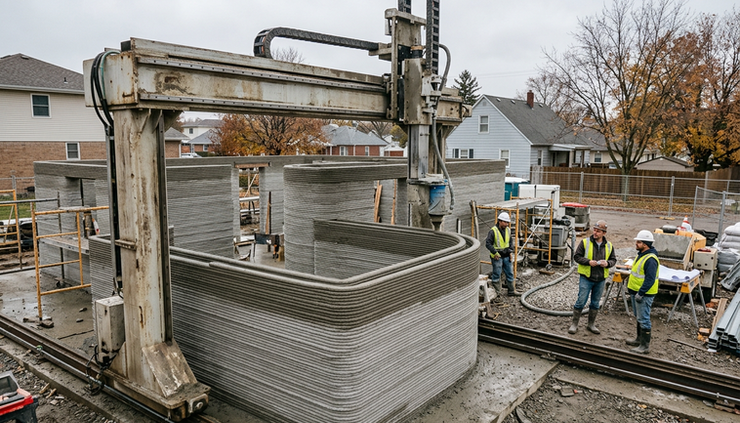
3D printed homes are no longer just an eye-catching construction demo. By late 2026, the technology has become a serious part of the housing conversation, especially in markets where labor shortages, high material costs, and slow permitting have limited new supply.
Most 3D printed homes use large robotic printers to place layers of concrete or concrete-like material. The printer usually creates the walls. Crews still handle foundations, roofs, windows, doors, plumbing, electrical systems, and finishes.
That means 3D printing does not replace the entire construction process. It changes one of the most labor-heavy parts of it.
The attraction is easy to understand:
Faster wall construction
Less framing waste
Stronger resistance to some weather risks, depending on design
Potential labor savings
More design flexibility for curved or unusual shapes
Recent investment in the sector has come from several directions. Homebuilders are testing printed communities. Construction technology companies are raising capital and improving equipment. Public agencies and nonprofits are looking at printed homes as one tool for affordable housing. Military, disaster recovery, and rural housing programs have also shown interest in faster building methods.
The promise is real, but so are the limits
The biggest mistake is to assume 3D printing will magically make homes cheap. Land still costs money. Permits still take time. Utility connections, labor, roofs, inspections, and financing still matter.
Printed homes also face local code questions. Inspectors, lenders, insurers, and appraisers need to feel comfortable with the materials and methods. That process is moving forward, but it is uneven across the country.
For homeowners, 3D printed homes may offer more options over time, especially in areas that need durable, modestly priced housing. For investors and builders, the better question is not whether the technology is interesting. It is whether it can be repeated at scale, approved locally, insured properly, and sold or rented at a price that works.
The next phase will likely separate strong operators from flashy experiments. The winners will be the companies that treat 3D printing as part of a complete housing system, not just as a machine on a job site.
Zillow is expanding while AI changes listing data
Zillow remains one of the most powerful names in residential real estate search. In 2026, its expansion into more markets and services reflects a larger fight over who controls the consumer’s first look at a home.
Search used to be mostly about listings. Now it is about data depth, speed, predictions, and user experience. Buyers want to know more than price, beds, baths, and square footage. They want school context, climate risk, tax history, HOA costs, commute patterns, remodel clues, rental potential, and neighborhood trends.
AI makes that more valuable, and more competitive.
Zillow, Redfin, Realtor.com, brokerages, MLS groups, mortgage firms, insurance companies, and newer property data companies are all competing to turn listing information into better guidance. AI can help read listing photos, summarize property descriptions, estimate renovation needs, flag pricing patterns, and match buyers to homes more quickly.
Yet the data fight is not simple. Listing data is fragmented. MLS rules differ by market. Public records can lag or contain errors. Photos and descriptions may leave out important property conditions. AI tools may sound confident even when the underlying data is thin.
Why AI listing data matters to buyers, sellers, and agents
For buyers, better AI search could make the home hunt less frustrating. Instead of scrolling through hundreds of listings, a buyer may get smarter matches based on lifestyle, budget, risk tolerance, and timing.
For sellers, stronger listing data can affect pricing and presentation. If AI tools start reading photos and property details at scale, weak listing photos or vague descriptions may hurt visibility.
For agents, AI listing data creates both pressure and opportunity. Simple property search is becoming more automated. Human advice has to move up the value chain, toward pricing strategy, negotiation, local judgment, and risk assessment.
For investors, AI can speed up screening. A tool that finds homes with rent potential, zoning flexibility, or price cuts can save time. Still, investors should verify every assumption. A model may miss a bad roof, a local rental restriction, a flood history issue, or a costly special assessment.
The main implication is that property data is becoming a competitive asset. The company with the best mix of accurate listings, consumer traffic, AI tools, and local relationships will have a major advantage.
Commercial real estate is still under pressure
The commercial real estate sector continues to face a difficult adjustment. The cheap-money era supported high valuations, aggressive borrowing, and easy refinancing. That era is gone.
Rising financing costs remain one of the biggest problems. Many owners borrowed when rates were lower. As loans mature, they may need to refinance at higher rates, bring in more equity, accept lower valuations, or sell. That is especially painful when rents are flat, vacancies are up, or operating costs have climbed.
The stress is not equal across all property types.
Office remains the most challenged in many markets. Remote and hybrid work reduced demand for older buildings, especially those with dated layouts, weak locations, or limited amenities. Top-tier office space in strong locations can still attract tenants, but lower-quality buildings often need major investment or price cuts.
Retail has been more mixed than many expected. Well-located centers with grocery anchors, service tenants, or strong local traffic have held up better. Weaker malls and older retail properties still face pressure.
Industrial property cooled from its strongest period, but demand for logistics, storage, and distribution space remains tied to e-commerce, supply chains, and regional growth.
Multifamily is no longer the automatic safe bet
For years, multifamily was treated as one of the safer corners of commercial real estate. Rental demand was strong. Homeownership was expensive. Lenders liked the asset class. Investors liked the steady income.
By November 2026, the picture is more complicated.
Many markets still have solid long-term rental demand, especially where population and job growth remain healthy. Yet some high-growth cities absorbed a wave of new apartment supply. That can slow rent growth, raise concessions, and pressure owners who underwrote deals based on stronger increases.
At the same time, insurance, repairs, property taxes, payroll, utilities, and debt service have all become harder to manage. A building can be full and still produce weaker returns if expenses rise faster than income.
This shift does not mean multifamily is broken. It means underwriting has to be more careful. Investors need to look closely at:
Loan maturity dates
Fixed-rate versus floating-rate debt
Local supply pipelines
Rent growth assumptions
Insurance trends
Property tax reassessments
Deferred maintenance
Tenant income levels
The best opportunities may come from patience. Distressed owners, upcoming loan maturities, and overbuilt submarkets could create discounted entry points. But buying only because prices are lower can be risky if income does not support the debt.
The next commercial real estate cycle will likely reward buyers who understand financing as well as property fundamentals.
What this means for homeowners and investors
The November 2026 real estate market is not giving one clear signal. It is sending several.
For homeowners, affordability depends on more than the purchase price. Property taxes, insurance, energy costs, repairs, and local rules all shape the real cost of ownership. Low-tax states deserve attention, but a low tax rate should be weighed against home prices, wages, climate risk, and quality of services.
Homeowners should also watch assessment notices more closely. In a rising-value environment, an appeal may be worth exploring if the assessed value seems out of line with comparable homes. Tax relief programs are often underused, especially by seniors, veterans, and lower-income homeowners who may qualify.
For buyers, 3D printed homes could become part of the option set in some markets. The right question is practical: has the home passed local inspections, can it be insured, is financing available, and how does resale compare with traditional homes nearby?
For investors, the market calls for stricter math. Low property taxes can improve returns, but they do not rescue a weak deal. AI tools can help screen properties, but they do not replace due diligence. Multifamily can still work, but only when rent, expenses, debt, and supply are modeled with care.
The biggest shift is that easy assumptions are fading. Property values will not rise everywhere just because they did before. Cheap refinancing cannot be taken for granted. Apartment demand does not guarantee strong returns in every city. A listing platform’s estimate is not a full valuation.
The real advantage now comes from checking the details others skip.
The takeaway for November 2026
Real estate is entering a more selective phase. Low property tax states are gaining attention as affordability stays tight. Property tax reform is becoming a larger issue as homeowners push back against rising assessments. 3D printed housing is moving closer to practical use, though it still depends on codes, financing, and scale. Zillow and its rivals are turning AI listing data into a new battleground. Commercial real estate is still working through higher financing costs, with multifamily shifting from a favored asset to a more demanding one.
For homeowners, the best move is to understand the full cost of ownership and stay alert to tax relief or reform changes. For investors, the best move is to slow down, verify the numbers, and treat debt terms as a core part of the deal.
The market still has opportunity, but it is less forgiving. In November 2026, careful buyers and patient investors have the edge.


Comments